
Perimenopause

Perimenopause
Perimenopause is a natural transition from a woman’s reproductive years to her post-reproductive years. It:
- Usually lasts 4 - 8 years
- Usually starts in your mid-to-late 40s
Several factors can influence timing, including:
- Family history
- Smoking
- Some treatments for cancer
- Immune conditions
During this stage, the ovaries gradually produce less estrogen and progestogen. Levels of these hormones also become unstable with more highs and lows, which can contribute to symptoms.
Menopause begins when a woman has not had a period for at least 12 months. From this point on, a woman is post-menopausal.
- The average age for menopause in the US is 51-52
- Most women reach menopause between 45 and 55
- Menopause before 45 is called early menopause (about 1 in 20 women)
- Menopause at or before 40 is considered premature menopause (about 1 in 100 women)
Black women, on average, reach menopause about 8-9 months earlier than White women.
Women who smoke are about 1.5 to 2 times more likely to have early menopause or premature menopause. Quitting smoking before your 40s lowers this risk.
What are the symptoms of perimenopause and how is it diagnosed?
Symptoms of perimenopause can include:
- Irregular periods
- Heavy bleeding
- Hot flashes
- Night sweats
- Brain fog
- Mood changes
- Vaginal dryness
- Sleep disturbances
Most women notice several symptoms at once rather than just one alone. These symptoms are real, not "just stress" or "just getting older."
Every woman's experience differs: some have very few symptoms, while others have symptoms that interfere with their daily life.
What should I expect to experience?
- Around 70% of US women experience hot flashes and night sweats at some point during perimenopause
- 1 in 3 report them as being moderate to severe in intensity in the last few years before periods stop.
- Black women are 70% more likely to have hot flashes and night sweats than White or Hispanic American women, and these symptoms tend be more intense
- Chinese and Japanese American women report these symptoms less often.
Perimenopausal women have the highest rates of insomnia (sleeplessness), depression, and anxiety among women of all age groups.
- About half of all women report sleep disturbances.
- The link between these symptoms and perimenopause is often missed, especially among women in their early 40s
- If you experience any of these symptoms in your mid 40’s to early 50’s, it is important to discuss these with your doctor, because effective treatments are available.
How do I get diagnosed?
The diagnosis of perimenopause is usually based on the symptoms (as described above), age (mid to late 40s) and changes in your menstrual cycle (fewer or less regular periods).
Blood Test
A hormone blood test to confirm the diagnosis is not usually recommended because hormone levels naturally fluctuate throughout perimenopause.
Misleading Result
A normal hormone result does not mean you are not perimenopausal.
Other Causes
Sometimes other blood tests may be recommended to rule out other conditions that can cause similar symptoms, such as thyroid disorders, iron deficiency or diabetes.
Understanding and Managing Perimenopause
Learn about the causes of perimenopause and and how best to manage the symptoms and the longer-term health effects.
What causes perimenopause?
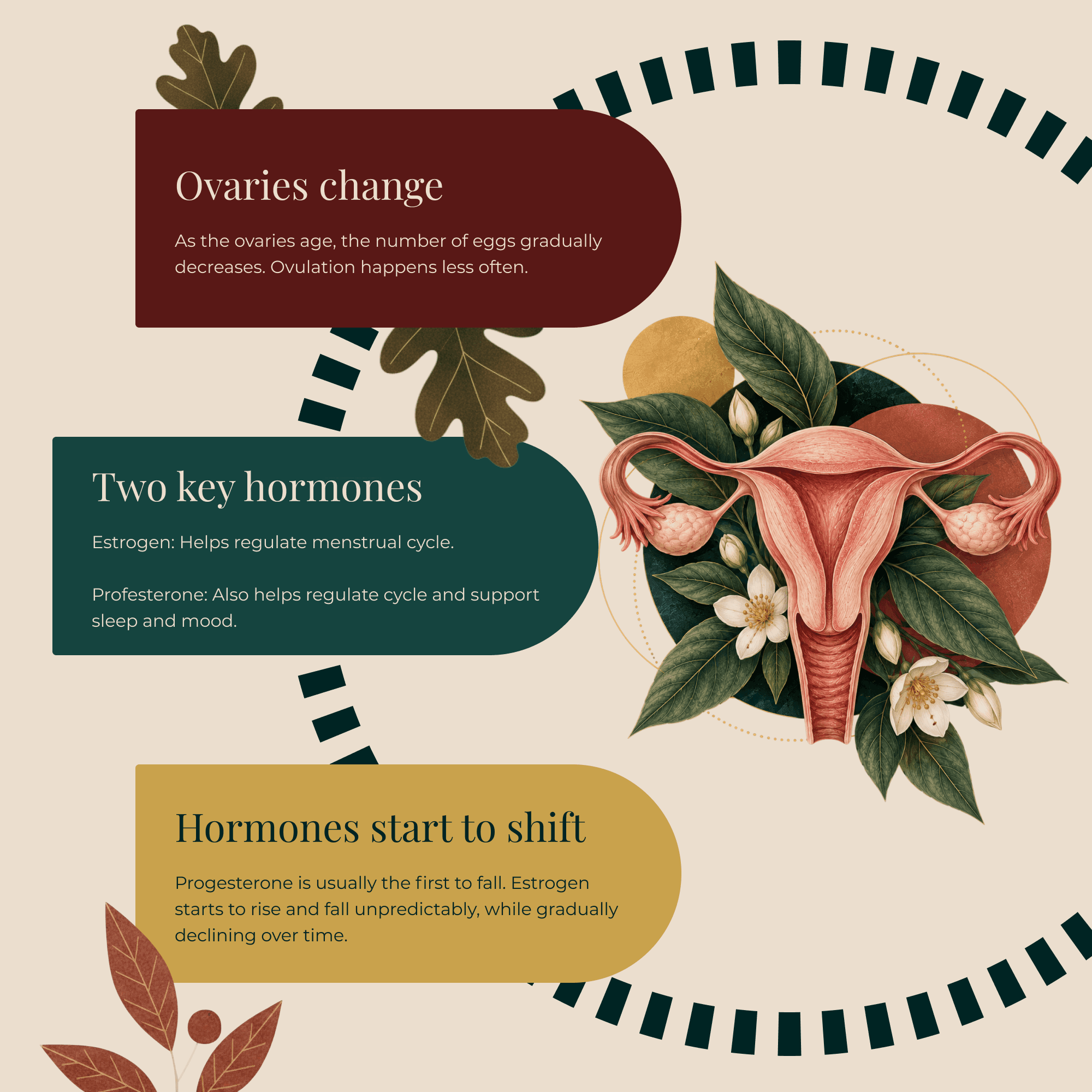
Perimenopause is caused by the natural aging of the ovaries. As a woman gets older, the number of eggs in the ovaries gradually decreases. Hormone production is less predictable, and ovulation (egg production) happens less often.
The main hormones involved are estrogen and progesterone.
- Estrogen helps regulate your menstrual cycle and supports your bones, heart, brain, and skin
- Progesterone also regulates your cycle, prepares your body for pregnancy each month, and can also support sleep and mood
As periods becomes less regular, progesterone levels are usually the first to fall.
At the same time, estrogen levels start to rise and fall unpredictably, while gradually declining over time. The sudden changes in estrogen levels cause many of the symptoms of perimenopause.
As estrogen levels decline, women begin to lose some of their natural protection against heart disease and risks for other long-term conditions increase:

Taking Charge of Your Perimenopause
Hormone therapy is the most effective way to manage perimenopausal symptoms. However, non-hormonal FDA-approved treatments may be more approporiate for some women.
Treatment
Other Considerations
Questions you might like to ask your doctor or other healthcare professional
Are my hot flashes, night sweats, or vaginal symptoms due to peri-menopause? If symptoms cause distress, should I be taking HRT?
I know that treatment with HRT can increase the risks of stroke and blood clots. Do I have any other conditions such as hypertension, diabetes, atrial fibrillation or ventricular tachycardia that could further increase these risks?
I know that treatment with HRT reduces fracture risks. Do I have a condition that would make this benefit particularly important, such as osteopenia (early sign of bone weakness) or osteoporosis (established bone weakness)?
It has been more than 10 years since my last period. Should I still consider starting HRT?
If I start treatment with HRT, how long should I continue it for?
If HRT isn’t a good fit for me, should I try some of the non-hormonal treatments or CBD?
Advocate for yourself
Decide which questions to ask and get a personalised cheat sheet to bring to your next appointment - ready to print or save.

All information is based on official recommendations from the American Heart Association and partner organisations for the prevention, detection, evaluation and management of high blood pressure in adults (2025), together with other selected, high-quality scientific evidence.