
MASH

MASH
Early Liver Disease
MASH stands for “metabolic dysfunction-associated steatohepatitis”. It is an early form of liver disease that is not caused by excessive alcohol consumption. It occurs when fat and cholesterol build up in the liver, resulting in inflammation.
MASH can cause permanent liver scarring called “fibrosis”. As the scarring becomes more severe, it can lead to more serious liver disease such as cirrhosis, liver failure and liver cancer.
- 20% of women with MASH will develop cirrhosis, liver failure or liver cancer
- MASH is the leading cause of liver transplants among women in the United States.
However, effective treatments for MASH now exist.
MASH becomes more common in women after menopause:
- Compared with pre-menopausal women, post-menopausal women have around 2-3 times greater risk of MASH
Hispanic and White women are more likely to develop MASH than Black Americans.
Women with MASH may also have diabetes, high blood pressure or high LDL cholesterol and so have a greater risk of progression of both liver disease and cardiovascular disease.
Women usually experience no symptoms of MASH.
How is MASH diagnosed?
MASH is usually a “silent” disease, meaning there may be no symptoms.
Blood tests can be conducted to assess liver health. If further assessment is needed, a FibroScan or MRI can directly measure liver fat and stiffness.
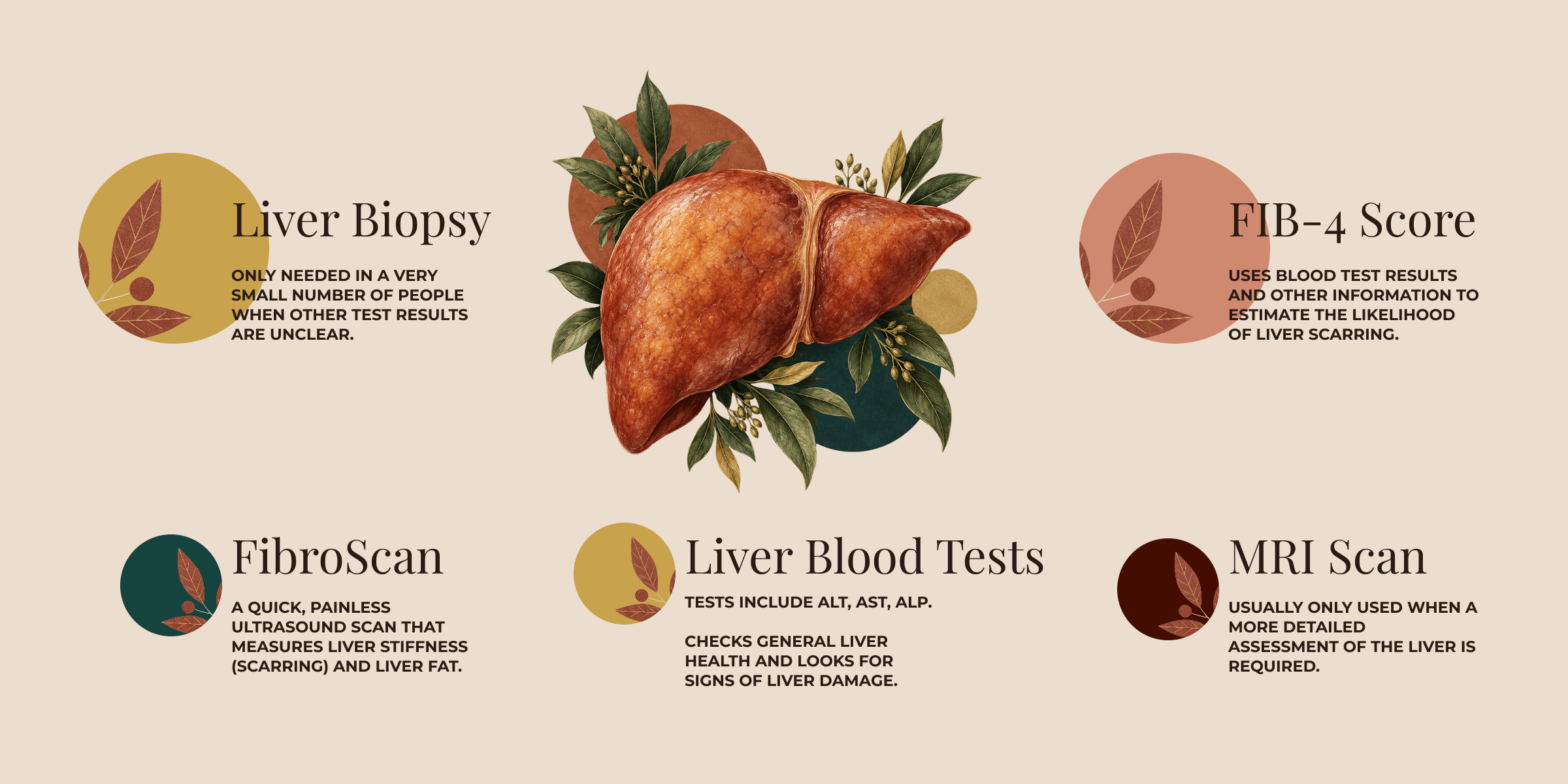
MASH often occurs alongside high blood pressure, cholesterol and diabetes. Your doctors may check these alongside your liver health.

What Are the Symptoms?
Signs and symptoms only occur when significant liver damage has developed. These signs and symptoms can include:
- Extreme tiredness
- Unexplained weight loss
- Swelling of the legs
- A dull pain in the upper-right side of the abdomen
- Swelling of the abdomen
- Yellowing of the eyes or skin (jaundice)

How high is too high?
There is no single “too high” number for MASH. Several tests are used to diagnose MASH and assess its severity, including the two compared below:
Blood tests of liver function, which is measured in U/L (units per litre). Levels that are considered high are:
A FIB-4 score, which is a better indicator of liver function:
Understanding and Managing MASH
Learn about the causes of MASH, how it might be prevented and what treatments are available.
What causes MASH?
Being overweight, especially when there is fat around the abdomen, is the most common risk factor for MASH in both women and men. However, there are some causes that are specific to women.
The risk of MASH is:

In addition, 30% of women who experience diabetes during pregnancy also develop MASH.
Taking Charge of Your MASH
For some women, lifestyle changes can help prevent the development of MASH and may improve MASH.
However, for many women, the most effective approach to managing MASH requires a combination of lifestyle changes, regular monitoring of liver health and appropriate medication.
Lifestyle Changes
Treatment
Ongoing benefits of treatment
Questions you might like to ask your doctor or other healthcare professional
(If your liver enzymes (ALT, AST or ALP) are high and you are a light drinker or a non-drinker) What is my FIB-4 score, and what does it mean for my liver health?
(If your FIB-4 score is high) Should I have a fibro scan?
(If you have had a fibro scan that has shown you have MASH) Do I have any signs of scarring or cirrhosis?
(If you have MASH and are not being treated) Should I be on Wegovy or Rezdiffra?
(If you have MASH plus another condition such as diabetes, high blood pressure or high cholesterol that is not being treated) Should I be on treatment for this condition as well as MASH?
(If you are overweight) Should I see a dietitian to get advice about weight loss? Should I be taking a GLP1 drug like Wygovy or Mounjaro to help me lose weight?
Do I need to stop drinking alcohol?
How often should I have my liver enzymes measured?
Advocate for yourself
Decide which questions to ask and get a personalised cheat sheet to bring to your next appointment - ready to print or save.

All information is based on official recommendations from the American Heart Association and partner organisations for the prevention, detection, evaluation and management of high blood pressure in adults (2025), together with other selected, high-quality scientific evidence.